https://sustainableict.blog.gov.uk/announcing-our-new-gdsa-working-groups-chairs-and-deputies/
Announcing our new GDSA Working Groups, Chairs and Deputies
Following the recent refresh of the Government Digital Sustainability Alliance (GDSA), we're delighted to announce our new Working Groups and the Chairs and Deputy Chairs who will be leading them. These groups will help drive forward practical guidance and collaboration on some of the most pressing digital sustainability challenges facing the the public sector today, aligned to the priority areas set out in the upcoming Government Digital Sustainability Strategy.
The refreshed Working Group structure has been designed to align with priority areas outlined in the upcoming Government Digital Sustainability Strategy. Efforts will focus on these key areas where GDSA members can work together to share best practice, provide industry insights and develop practical guidance and recommendations to government to accelerate progress towards more sustainable digital services and operations.
Circularity & Waste Reduction

Chair: Deborah Andrews, London South Bank University
Deputy Chair: Emily Watson-Breeze, BT
This group will focus on developing best practice guidance for second-life devices and end-of-life management, including approaches to reporting and measurement.
“I am very proud to have been invited to lead this group, which is an amazing opportunity for me to translate academic research into real world impact. The group is comprised of experts from commercial, non-profit, and academic organisations and our extensive and varied experience will lead and support positive transition towards sustainability and circularity in digital tech across government and beyond.” - Deborah Andrews, London South Bank University
Through the GDSA, my ambition is to develop concise, practical guidance that enables IT and procurement teams across the public sector to deliver measurable digital sustainability outcomes. Over time, we aim to showcase successful case studies to drive wider adoption and accelerate action across both public and private sector organisations." — Emily Watson-Breeze, Sustainability Activation Manager, BT
Emissions

Chair: Anthony Levy, Circularity First
Deputy Chair: Alexander Groves, SCC
The Emissions Working Group will explore how government can measure and reduce emissions from its digital estate, with particular focus on areas such as data retention, infrastructure efficiency and performance-based refresh cycles.
“Whilst we continue to improve how we measure emissions, we will also accelerate the work to meaningfully reduce them. This working group targets both reducing digital emissions and using digital to reduce organisational emissions. In the words of Selwin Hart (UN Climate Action Team), “implementation does not require consensus” we will take those willing on the journey and use them to inspire the rest. We can make a tangible difference here so let’s get cracking.” — Anthony Levy, CEO, Circularity First
“Really looking forward to the opportunity to learn from each other sharing best practice and helping to inform Government policy and procurement to help reduce ICT emissions. Customers help to drive change in business and largest buyer of goods and services in the country, the Government is uniquely placed to do this.” — Alex Groves, Head of Sustainability, SCC
Planetary Impacts

Chair: Katherine Larocque, Global Electronics Council
Deputy Chair: Avinash Lunj, Sopra Steria
This group will help government better understand and report on wider environmental impacts across the digital supply chain, including water consumption and critical mineral use.
“Our focus is on helping government better understand and reduce the environmental impacts of digital technology beyond carbon, particularly in relation to water use and critical minerals. My ambition is to develop practical guidance and identify potential measurement frameworks that support government’s 2030 sustainability goals, while accelerating the adoption of resource efficiency and circular economy principles across the public sector digital landscape. As GDSA stakeholders, we have a unique opportunity—and responsibility—to ensure that digital transformation delivers not only better public services, but also more sustainable outcomes for the planet.” — Katherine Larocque, Director, Ecolabels and Policy, Global Electronics Council
“I am excited to be working with GDSA members to build a clear, structured action plan to help Defra and the UK government tackle complex environmental challenges like critical mineral and water usage in digital tech. Over the next 18 months, we will target immediate, practical actions to bridge systemic gaps. This groundwork will ensure that by 2030, we are all better positioned to proactively measure and manage the environmental impacts of our digital economy, without it costing us the earth.” — Avinash Lunj, UK Head of Climate & Environmental Sustainability, Sopra Steria
Social Impacts

Chair: Shelley Cotterill, DXC Technology
Deputy Chair: Giorgia Litwin, Version 1
The Social Impacts Working Group will examine both the positive and negative social impacts of digital technology and supply chains, identifying opportunities for social value as well as maximising benefits and mitigating risks.
“My ambition is to bring together government, industry and academia to help turn social impact from an aspiration into a measurable, evidence-led discipline. By building practical guidance, shared learning and robust insight, we can help shape a future where digital transformation not only reduces harm but actively creates opportunity, inclusion and lasting value for communities across the UK.” — Shelley Cotterill, Head of Social Value UKI, DXC Technology
"I'm delighted to be taking on the role of Deputy Chair for the Social Impacts Working Group and working alongside Shelley to help coordinate and drive the group's ambitions. I'm passionate about the positive impact technology can have on people and communities, and I'm excited for the working group to collaborate, raise awareness and support more practical and meaningful social impact across the sector." — Giorgia Litwin, Client Partner, Version 1
Disruptive Technology
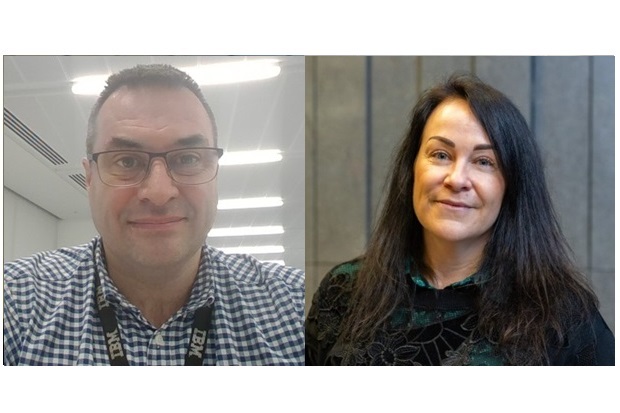
Chair: Derek Newton, IBM
Deputy Chair: Claire Robinson, Transform UK
This group will develop principles and practical guidance to help organisations adopt emerging and disruptive technologies, such as AI and Quantum, in a sustainable and responsible way.
“Our collective focus within the Working Group is to deepen awareness and understanding of the key technological advances shaping change. We will highlight how disruptive technologies act as a catalyst for transformation, mindful that progress needs to deliver positive outcomes for people, planet, and economic value. Evolving from the Sustainable AI Working Group established in 2025, our role within the wider GDSA is to inform, enable, and help guide the responsible adoption of disruptive technologies in ways that translate innovation into measurable, sustainable impact.” — Derek Newton, Integration Specialist, IBM
“I’m a connector of people, ideas, data and tech, and I'm bringing boundless energy and enthusiasm to our group’s missions; the first of which is to guide more sustainable AI adoption across the public sector. I believe this is where GDSA can make the biggest difference right now and by doing this we will lay foundations to ensure future disruptive technologies have environmental and social sustainability baked in from the outset, not bolted on afterwards.” — Claire Robinson, Director of Sustainable Business, Transform UK
Resilience

Chair: Jonathan Scott, Hitachi Solutions
Deputy Chair: Beata Baumann, Atos
The Resilience Working Group will focus on understanding the risks that climate change poses to governments digital infrastructure and supply chains, helping to inform how it builds more resilient digital services and operations for the public.
“I have been working with the GDSA for a couple of years and most recently was the Planetary Impact working group co-chair. There’s a nice synergy between my current role and the aims of this working group so I am keen to focus on how we might advise on making digital systems more resilient in the face of disruptive climate change.” — Jonathan Scott, Vice President Assurance, Hitachi Solutions
“I’m keen to contribute my expertise in supply chain engagement and decarbonization and I hope to identify concrete solutions to strengthen resilience across value chains.” — Beata Baumann, Procurement Sustainability Director, Atos
Embedding Sustainability

Chair: Ewen Anderson, P2Zero
Deputy Chair: Amy Wagner, Hippo Digital
This group will look at how sustainability can be embedded into day-to-day decision making and delivery across government, covering areas such as reporting, leadership, capability, service design and procurement.
“My role is to coordinate resources and skills within the working group to support the ambition of driving meaningful improvements in departmental digital sustainability strategy and practices. My ambition for the GDSA is that it should create a highly visible example of industry, academia and government working together for the common good, transparently, accountably and without commercial gain or bias. My extended ambition is that this can be replicated beyond the UK to further expand the reach and impact of what we are doing together.” — Ewen Anderson, CEO, P2Zero
Our Working Groups are at the heart of the GDSA's collaborative approach. Bringing together expertise from across government, academia and industry, they provide a space for members to share knowledge, develop practical outputs and tackle common challenges together.
We would like to thank all of our new Chairs and Deputy Chairs for volunteering their time, expertise and enthusiasm to lead this work. Their leadership will help shape the next phase of the GDSA and support our ambition to make sustainable digital practice the norm across government and beyond.
We look forward to sharing more updates on Working Group activities, outputs and opportunities to get involved in the coming months.

Recent Comments