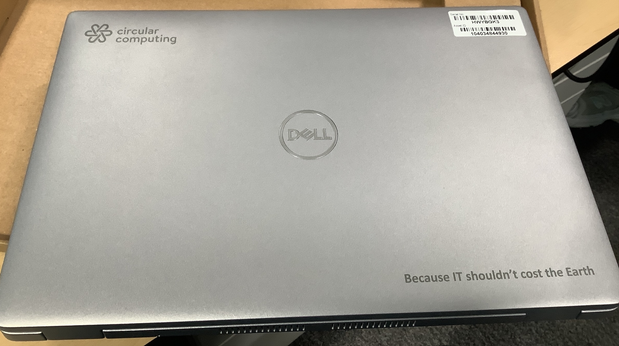
One of the remanufactured laptops that have been introduced into Defra under the End User Services contract.
Sustainable ICT is becoming central to how we design, buy, run and improve digital services. The question now is how we turn good intentions into everyday practice — moving from sustainability being driven by individual champions to making it part of how decisions are made from the very start.
Over the last decade, sustainability has become an increasingly important part of conversations about digital services, technology and ICT across government and industry.
Since around 2015, I have seen growing awareness of sustainable ICT practices, driven largely by passionate individuals, local initiatives, and examples of good practice. These efforts have achieved a great deal. They have helped raise awareness, demonstrate what is possible and encourage organisations to think differently about the environmental impact of digital services.
However, they have also highlighted a challenge.
Too often, progress has relied on individual champions rather than being embedded into the systems and processes that shape everyday decision-making. As a result, organisations can develop different approaches, varying levels of maturity and multiple ways of measuring success.
If sustainability is to become truly business as usual, I believe we need to move beyond treating it as a separate activity and instead make it an integral part of how we design, acquire, deliver, and operate digital services.
One principle that has shaped my thinking over the years is - sustainability by design, not sustainability by exception
If sustainability requires a separate process, additional approvals, or specialist intervention every time a decision is made, it risks becoming something that is considered only when time and resources allow.
My experience suggests that the most effective approach is to build sustainability into the processes that already exist.
Rather than creating parallel structures, sustainability should be considered within governance, investment decisions, requirements management, architecture reviews, commercial activity, programme delivery, assurance processes, and service management.
The aim should be simple: make the sustainable choice the easiest and most natural choice.
Moving beyond additional processes
One of the lessons I have learned is that creating more sustainability processes does not always lead to better sustainability outcomes.
Over the years, organisations have introduced a variety of frameworks, maturity assessments, and reporting tools. Many have been developed with the best intentions, and some have delivered real value. However, they can struggle to gain traction when they operate alongside existing delivery and governance arrangements rather than within them.
In practice, this can create additional reporting requirements without necessarily improving decision-making.
A more effective approach is often to integrate sustainability into activities that organisations already undertake. Business case approvals, architecture reviews, portfolio reporting, supplier management, assurance activities, and service management processes all provide opportunities to consider sustainability without creating additional layers of administration.
When sustainability becomes part of normal business activity rather than an additional task, it is far more likely to influence decisions and become embedded over the long term.
Making better use of information we already have
Good decisions rely on good information, and consistent approaches to sustainability reporting remain important.
At the same time, I believe we should be cautious about creating unnecessary new reporting burdens.
Many suppliers already provide sustainability-related information through contract delivery, performance reporting, and corporate disclosures. Rather than requesting the same information through separate channels, there is often an opportunity to make better use of what is already available.
For example, sustainability data can be discussed during routine supplier performance meetings, service reviews and governance forums, alongside more traditional measures such as cost, performance, and delivery outcomes.
This helps reduce duplication while increasing the likelihood that sustainability information is actively considered when decisions are made.
In Part Two Christopher will be explaining the benefits of thinking about sustainability earlier, and the opportunities this presents.
More information
Christopher Gale is an Acquisition Safety and Environmental Manager, Digital & Data, at the Ministry of Defence.
If you're interested in finding out more about what we do check out our LinkedIn page for all the latest news, stories and job openings. While you're there, why not give us a follow?
Like what you read? Subscribe to the blog for all the latest updates.
Leave a comment