
Lydia Tabbron reflects on a recent event which marked a key milestone in our digital sustainability journey.
I wrote recently about our plans to bring together digital and sustainability leaders from across government, industry and academia for the second Government Digital Sustainability Alliance (GDSA) Summit.
The day itself, which was hosted at One Great George Street in London and organised by Defra’s digital sustainability team in collaboration with Think Digital Partners, was a day of bold announcements, inspiring ideas and well-deserved recognition.
The impact of ICT
Information and Communications Technology (ICT) now produces around 4% of global greenhouse gas emissions, equivalent to aviation, and that figure keeps rising. Closer to home, the digital sector contributes almost 5% of greenhouse gases (GHG) to the UK’s total GHG emissions and in 2023/24 government produced nearly 1500 tonnes of e-waste.
Every device we use and every service we build has a real environmental impact. The choices we make about technology, procurement and suppliers directly shape those numbers.
A new Taskforce and bold commitments
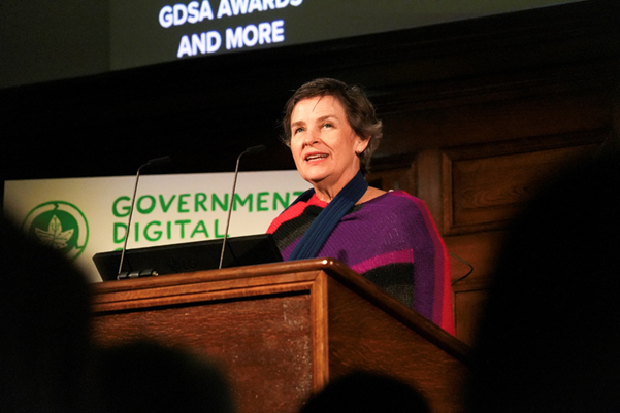
Our first keynote speech at the Summit came from Minister for Nature and Circular Economy Mary Creagh, who announced the formation of the Taskforce for Environmental Resilience and Efficiency (TERE).
This new cross-government hub, co-led by Defra, will bring together specialists from the largest operational departments to help government act earlier, respond faster, and move from reactive fixes to proactive planning on environmental risks within government.
Minister Creagh also confirmed that Government Buying Standards are being updated to include industry-leading sustainability criteria for ICT, and that Defra has become the first government department to adopt refurbished devices as default, delivering longer device lifespans, lower energy use and better value for money.
In Defra we will also lead on the upcoming Government Digital Sustainability Strategy, setting a shared direction on sustainability, efficient and circular digital services across government.
The Summit’s panel discussions reflected the strategy’s core themes directly, demonstrating that the ambition behind it is already being put into practice.
A new era of leadership
The Summit also marked a significant moment in Defra's digital leadership, with Edd Parry confirmed as the new lead for digital sustainability in government.
Edd, who replaces Chris Howes, has been central to Defra's pioneering work on circular procurement and is well placed to drive this agenda forward. Indeed, he wrote about this very topic just a few months back.
A call to honesty and action
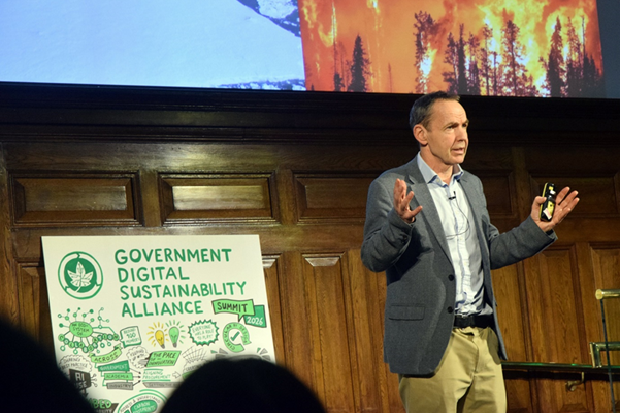
We were also hugely privileged to be joined by Mike Berners-Lee, one of the world's leading voices on sustainability and climate change, and author of titles such as How Bad are Bananas.
Mike's challenge to the room was also direct. He pointed to the Jevons Paradox, the well-evidenced tendency for efficiency gains in technology to lead to rising overall consumption rather than reducing it.
The answer, he argued, is not simply to do digital more efficiently, but to ask harder questions about what we are doing digital for, and whether its use is genuinely good for people and the planet.
He set out three values for the room: respect the environment, respect the truth, and respect all people. He called for supply chain transparency and invited every organisation present to ask honestly whether their supply chains truly share their values.
A day of practical insights and discussion
Across eight panel discussions, over 40 speakers explored the full breadth of digital sustainability, from net zero and scope 3 emissions to circular economy, water use in data centres, artificial intelligence (AI), social value, digital inclusion, and climate resilience.
A few themes from the day:
- Procurement is a powerful lever. Government spends around £14 billion on ICT each year, and how we buy shapes what industry supplies. Defra is already leading by example as the first government department to adopt refurbished devices as default.
- We need to look beyond carbon. Water consumption, critical minerals, land use and social risks throughout supply chains all demand attention. Servers contain 23 raw minerals that are difficult to recover, and we are mining at an unprecedented rate.
- Technology is not neutral. AI brings significant sustainability implications alongside its efficiency gains. Every decision about what to build and how to use it has an environmental cost.
- Digital inclusion matters. 1.6 million people in the UK live offline. There are 800 million unused devices in the UK. Sustainable technology procurement has a real role to play in closing the digital divide and creating social value.
- Climate resilience is everyone's business. Our digital infrastructure is increasingly vulnerable to both environmental hazards and cyber threats. Building resilience must become a standard part of how we plan, not an afterthought.
Celebrating excellence
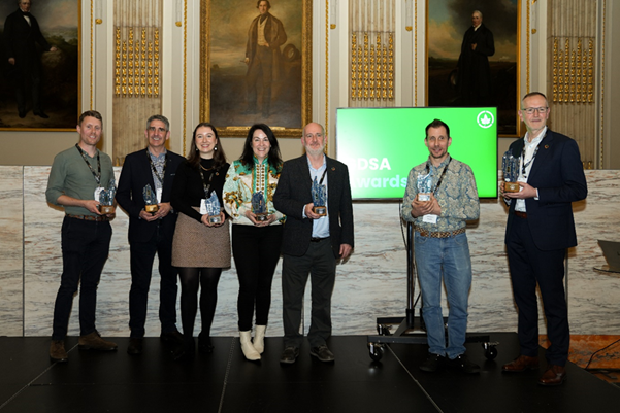
The day concluded with the first GDSA Awards ceremony, where we recognised and celebrated outstanding contributions to digital sustainability. The trophies themselves were aptly made out of e-waste – recycled computer chip board and upcycled wooden pallets – kindly provided by GDSA members Tier 1.
We are delighted to congratulate all the winners.
- Collaboration: Emily Watson-Breeze, BT
- Leadership: Ewen Anderson, P2zero
- Growth: John Steward, Defra
- Strategic Insight: Mark Butcher, Posetiv
- Efficiency: Ned Gartside, Defra
- Advancing Measurement in Government: Ben Tongue, NHS England
Next steps
We are already building on momentum from the day with plans to launch new working groups reflecting the priority areas of the upcoming Government Digital Sustainability Strategy. More on this soon, so do watch this space.
More information
Lydia Tabbron is the Digital Sustainability Lead for Defra and co-ordinates the GDSA on behalf of government. She has organised the summit with the support of Think Digital Partners.
The GDSA brings together UK government, ICT and digital supply chain, academics and third sector organisations to drive progress on the sustainability of the UK government’s ICT and digital estate.
If you're interested in finding out more about what we do or would like to know more about becoming a member of the alliance, please get in touch.
Check out our LinkedIn page for all the latest news, stories and job openings. While you're there, why not give us a follow?
Like what you read? Subscribe to the blog for all the latest updates.

Leave a comment